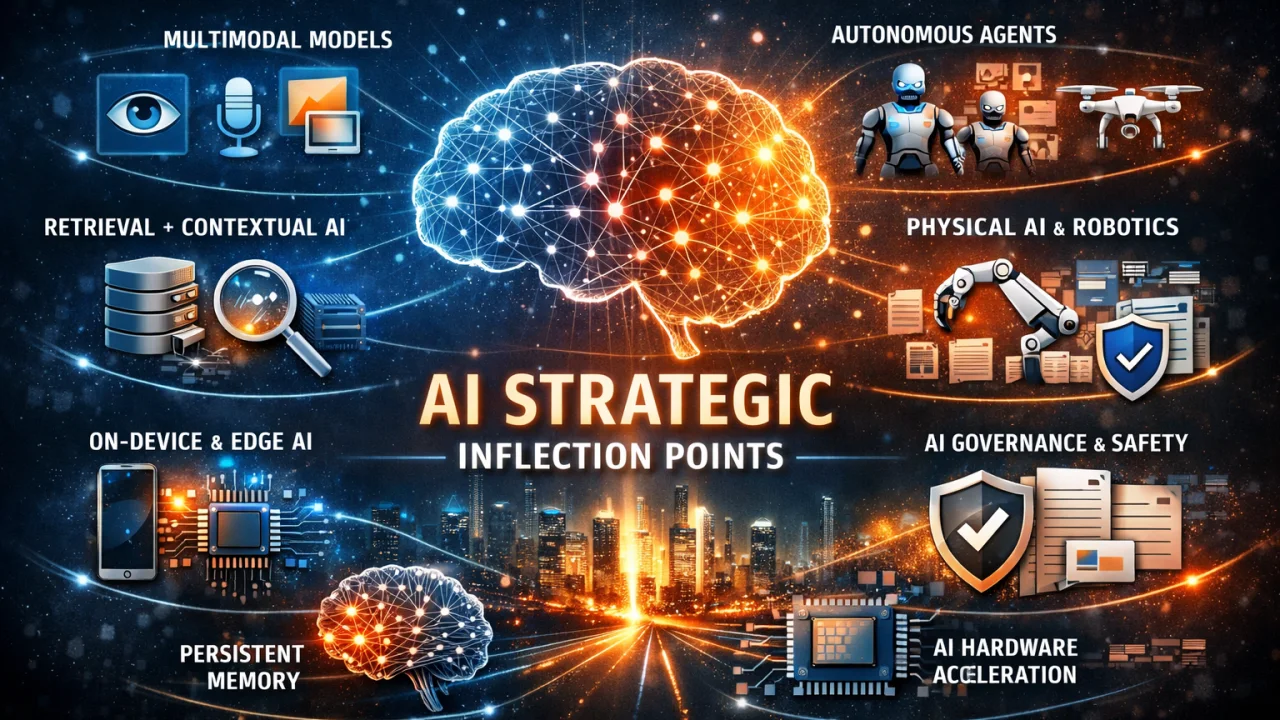
It feels like we are experiencing a new AI technology cycle almost every week, with constant news about the latest shiny objects with names like OpenClaw, Moltbook, and concepts like larger context windows and agent swarms. The promise sounds like more autonomy, better decisions, and greater leverage.
But for leadership, the real question isn’t capability.
It’s economics.
Just imagine agentic armies deployed as virtual digital teams, researching, debating, double-checking, and coordinating with each other. All that extra “thinking” can potentially produce better outcomes, but it also consumes significantly more computing resources. In simple terms, each additional layer of AI reasoning increases costs.
Which raises a few questions every executive should be asking:
Where is the real ROI?
Not “where does this look impressive?” but where does deeper AI reasoning materially change business outcomes?
Multi-agent approaches may make economic sense when:
- Decisions are high-stakes (capital allocation, risk, compliance, safety)
- Mistakes are expensive
- Problems are complex and non-routine
- Independent challenge and validation of results are baked in
They’re less likely to make sense when:
- The work is repetitive or predictable
- “Good enough” answers are sufficient
- AI is being used to compensate for unclear processes or poor data hygiene
If AI is replacing risk, it can pay for itself.
If AI is replacing discipline, this gets expensive quickly.
Are the incentives aligned?
This is the uncomfortable part.
AI providers are incentivized to build systems that think more, explore more, and interact more. That’s good for advancing the technology and good for their revenue.
Your incentives are different:
- predictable costs
- measurable value
- clear accountability
- auditable controls
So the leadership question isn’t “Can we deploy advanced AI?”
It is “What prevents advanced AI from becoming an unbounded operating expense?”
When does the cost–benefit equation actually work?
In my experience, the economics start to make sense only when AI:
- reduces human effort in a measurable way
- lowers risk exposure
- accelerates outcomes with real financial impact
- operates within clear limits
Without guardrails, these systems will always try to be helpful, but “helpful” may mean doing more than is economically justified.
Can a non-deterministic system provide repeatable, reliable, trusted results?
What does this mean for tools like OpenClaw, Moltbook, or the latest agent-spawning LLM?
The latest round of agentic wizardry might lower the barrier to building and scaling AI “teams, ” and that is powerful, but the next advantage won’t be a swarm of AI agents.
It will be:
- knowing how many are needed
- deciding where autonomy is allowed
- setting visible, measurable governance rules
- controlling costs like any other enterprise resource
The future isn’t “AI everywhere.”
It’s AI where the business case holds up.
If your organization can’t see where AI spending maps to business outcomes, you don’t yet have an AI strategy; you have experimentation at scale.
I’m curious how other leadership teams are approaching this:
- Who owns AI governance?
- How are you deciding which decisions deserve deeper AI reasoning?
- What’s your pain threshold for AI cost without demonstrable outcomes?